← All product work

Momento stopped nagging and started sending postcards.

Momento is an iPhone app for keeping small, ordinary moments: a line of text, a photo or a voice note. I designed and built it on my own.

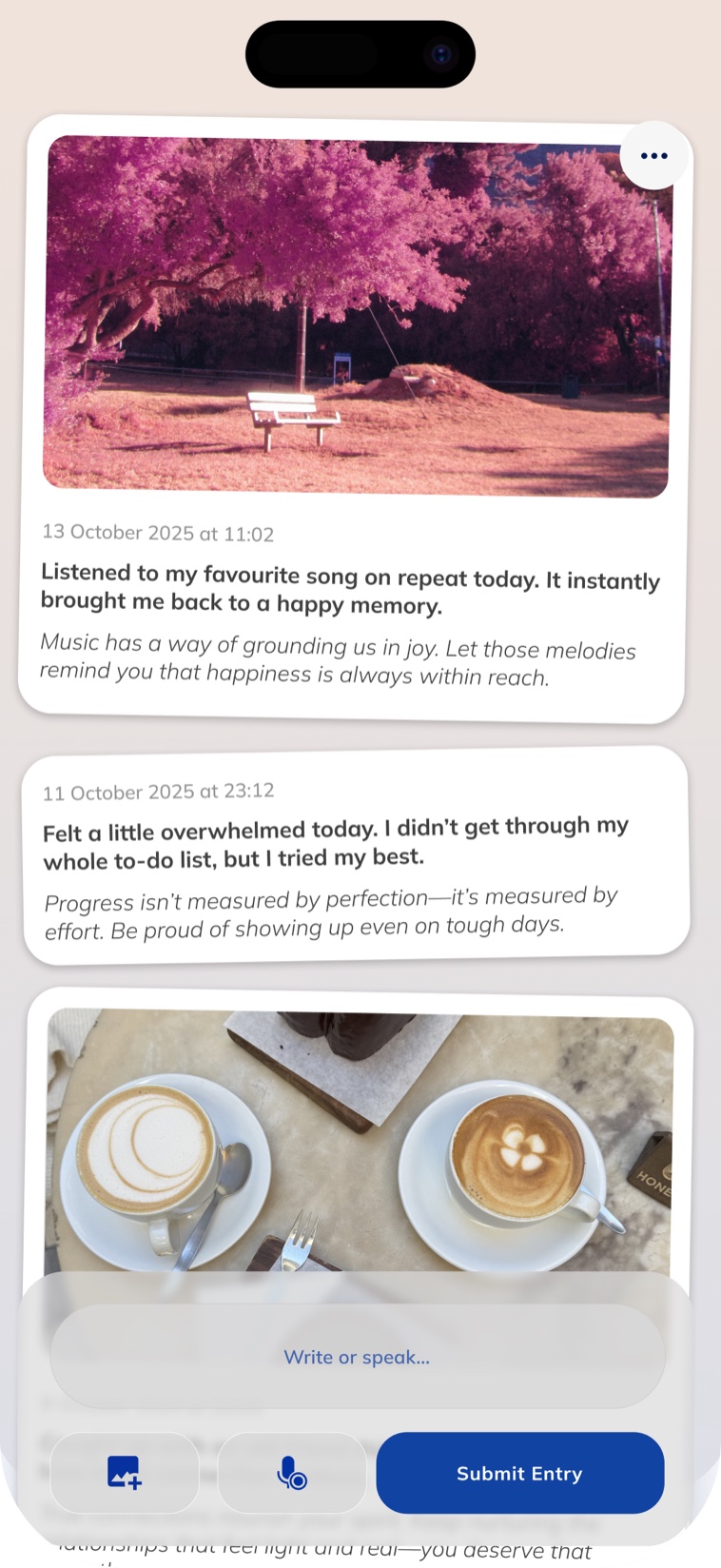
Momento v1 journal from October 2025: entries with photos, each followed by an AI affirmation in italics, and a Submit Entry button.
A coach in your journal.v1, October 2025
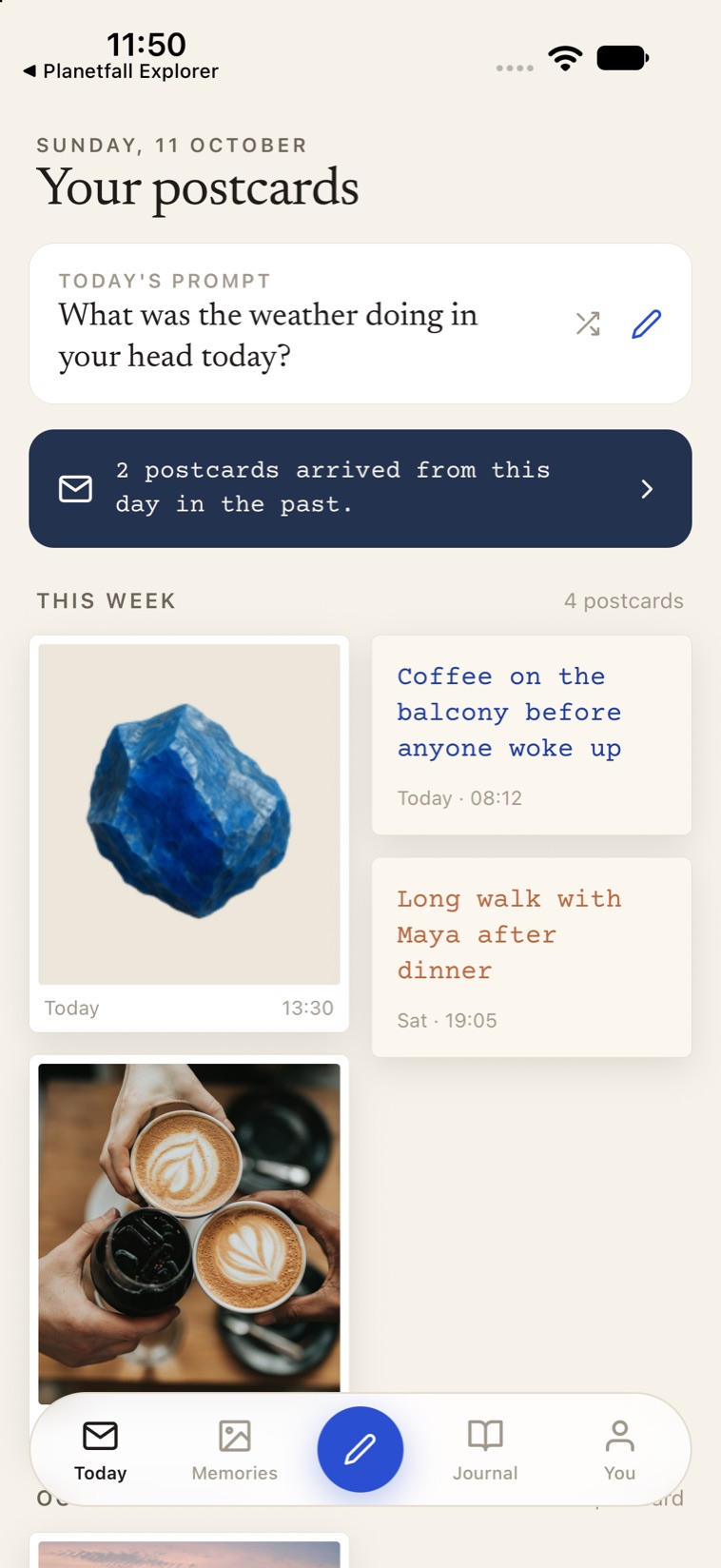
Momento 1.6 home: today's prompt, two postcards arrived from this day in the past, and a wall of this week's postcards.
A wall of postcards.1.6, submitted
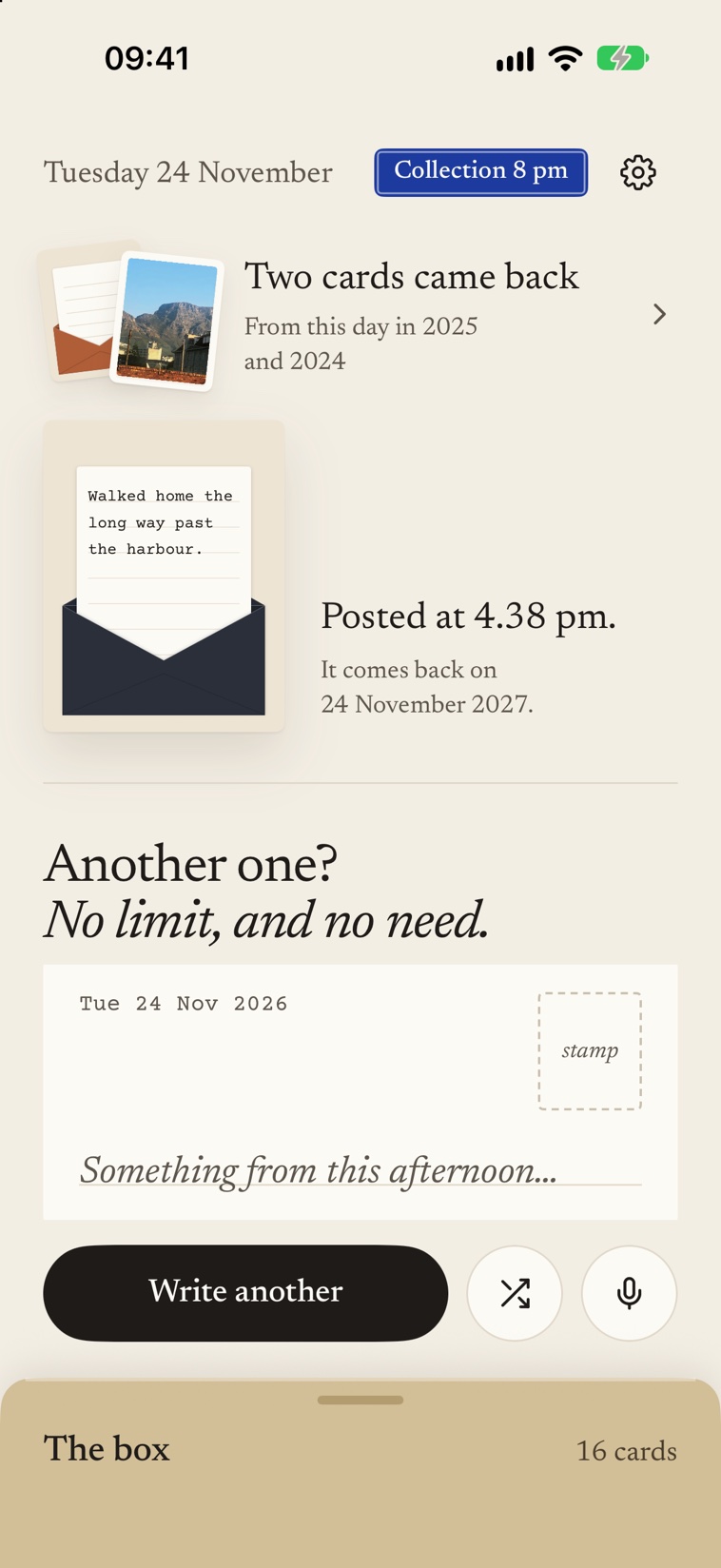
Momento 2.0 desk: two cards came back from this day in 2025 and 2024, today's card is posted and comes back on 24 November 2027, and a blank card waits for another one.
It comes back next year.2.0, in TestFlight
Role
Founder. Product, UX, UI, illustration direction and engineering
Platform
iPhone, with two-screen layouts for iPhone Duo. v1 in React Native, 2.0 rebuilt in SwiftUI
Timeline
v1 October 2025. 1.6 submitted October 2026. 2.0 in beta
Team
Me, with AI coding agents that I direct and review

Where v1 stood

A journal with streaks, badges and AI affirmations. It sold the opposite of what its users wanted, and the store and search data showed almost no pull.

What I changed

I rewrote who it was for, removed every pressure mechanic, and redesigned it as postcards. Then I rebuilt it natively as a postbox: write, stamp, post, and it comes back in a year.

Where it is now

1.6 is finished and submitted to Apple. 2.0 runs on iPhone in beta, with a small server and no database to pay for.

A gentle idea, sold like a gym.

Momento launched in October 2025. The idea was gentle: capture small moments and come back to them. But the product had picked up the habits of every journaling app. It had a streak flame, unlock badges, "little rewards you earn for each daily entry", and an AI that wrote uplifting affirmations in the voice of a motivational coach.

In September 2026 I defined the one person Momento is for: the low-pressure memory keeper. Someone who wants to keep ordinary moments without a habit to maintain. Measured against that person, v1 was working against itself. A missed day broke a streak, which is exactly the guilt they were avoiding.

40App Store product page views in 90 days
10first-time downloads
1lifetime purchase
0search clicks from 266 impressions

Source: App Store Connect, 90 days to 16 September 2026, and Google Search Console, 22 August to 18 September 2026.

1.6: from entries to postcards.

I explored a dark, data-style redesign, then skies that changed with the time of day. Both felt like the wrong kind of attention. Postcards won: everyone knows what one is, and nobody feels guilty about not sending one.

Remove every pressure mechanic.

The streak, the flame and the reward badges are gone. "Streak and stats" became "Your journal": days with a moment, moments kept and words written, with no score. The AI coach was rewritten too. The weekly reflection is now a letter from your week, with no advice and no praise for consistency.

Why: you can't promise "low pressure" in the copy and count streaks in the UI. The product has to keep the promise.
Every moment is a postcard you can turn over.

A photo becomes the front of a card with a white border. Words alone become a typographic card. Tap to turn it over: typewriter text, a handwritten date, a stamp, and a short P.S. reflection written by AI.

Why: a familiar object explains the whole app without an onboarding tour, and the back of the card gives AI a small, bounded job instead of a coaching voice.

Collect stamps, not streaks.

I art-directed 25 engraved stamps. They arrive with some postcards, on no schedule, so there's still something to collect, but nothing to keep up with.

Why: rewards don't have to be about consistency. A surprise you can't lose keeps the delight and drops the guilt.

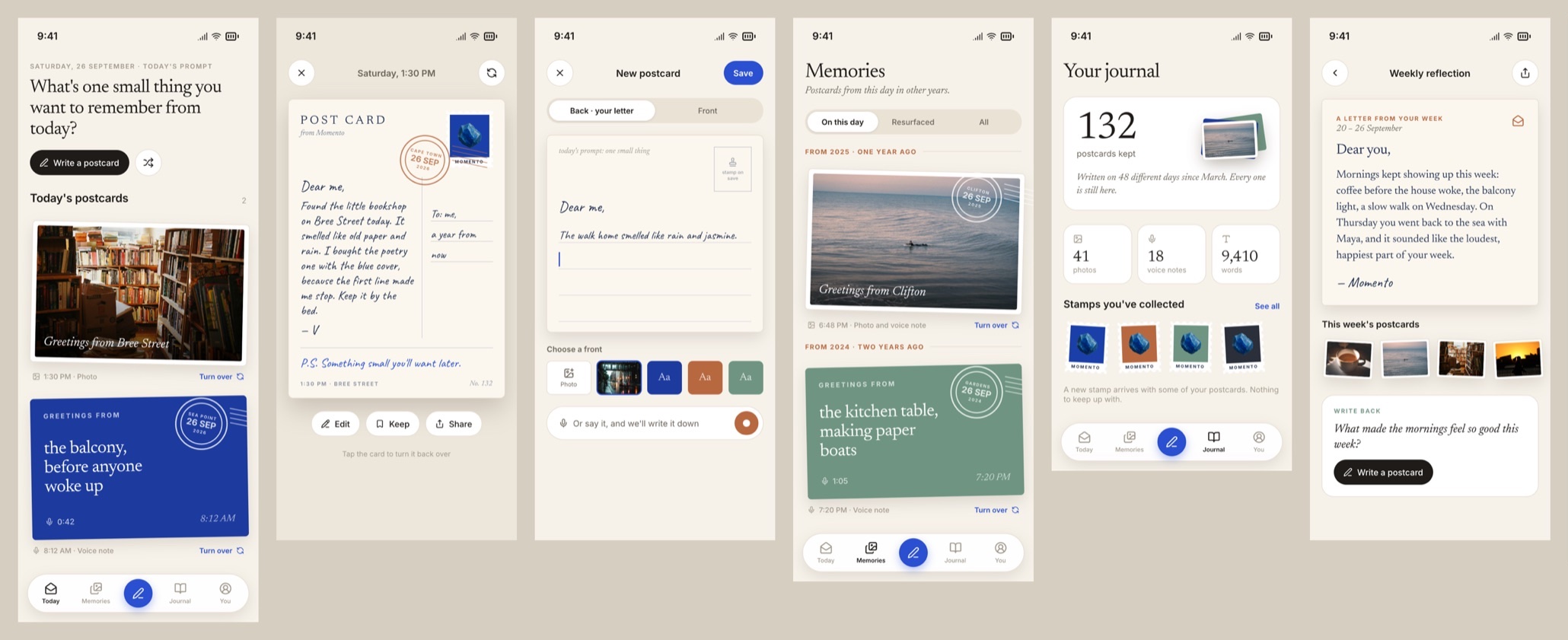
Six Momento 1.6 screens: today's prompt, a postcard back, writing, memories, journal and a weekly letter.
1.6 as submitted to Apple in October.

2.0: Momento is a postbox.

Postcards fixed the tone. The next question was what makes someone open the app at all. The answer was time: you write a card, stamp it and post it, and it comes back through the door on the same day next year.

v1 A habit journal

Asks you to
Write every day
Reward
A streak that can break
Coming back
Because you'd lose your streak
AI
A motivational coach
Built with
React Native, a hosted database, paid photo storage

2.0 A postbox

Asks you to
Post a card when something happens
Reward
Cards from this day in past years come back
Coming back
Because something arrived
AI
One letter on Sunday about your week
Built with
SwiftUI, SwiftData and your own iCloud. Nothing to host

Three places instead of four tabs.

2.0 replaces tabs with places: the desk where you write, the mat where cards arrive, and the box where they're kept. Writing is unlimited and free. "First class" is the lifetime upgrade.

Why: places match the postbox story, so the navigation explains itself. And keeping writing free means nobody hits a wall at the moment they want to remember something.

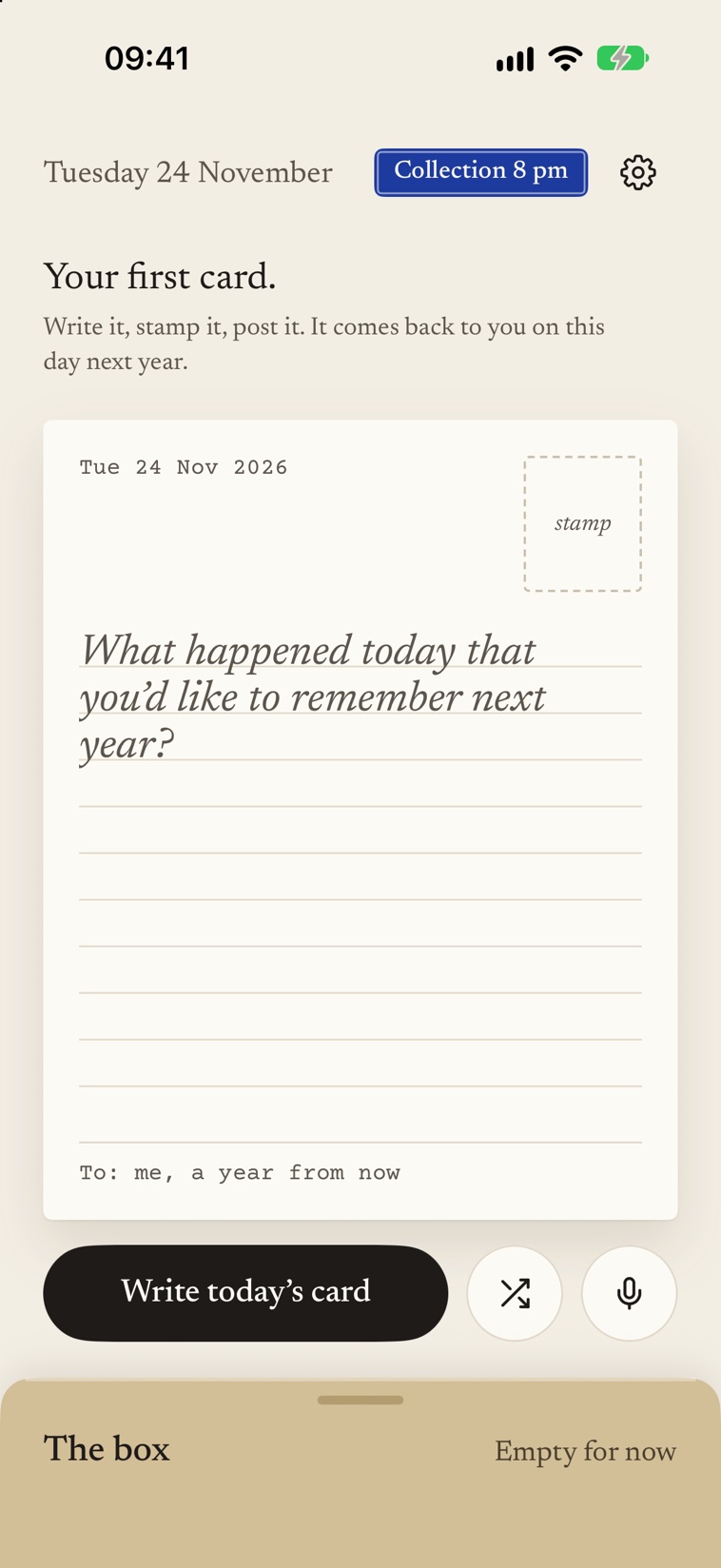
Momento 2.0 desk on the first day: 'Your first card. Write it, stamp it, post it.' A blank card asks what happened today that you'd like to remember next year, and the box below is empty for now.

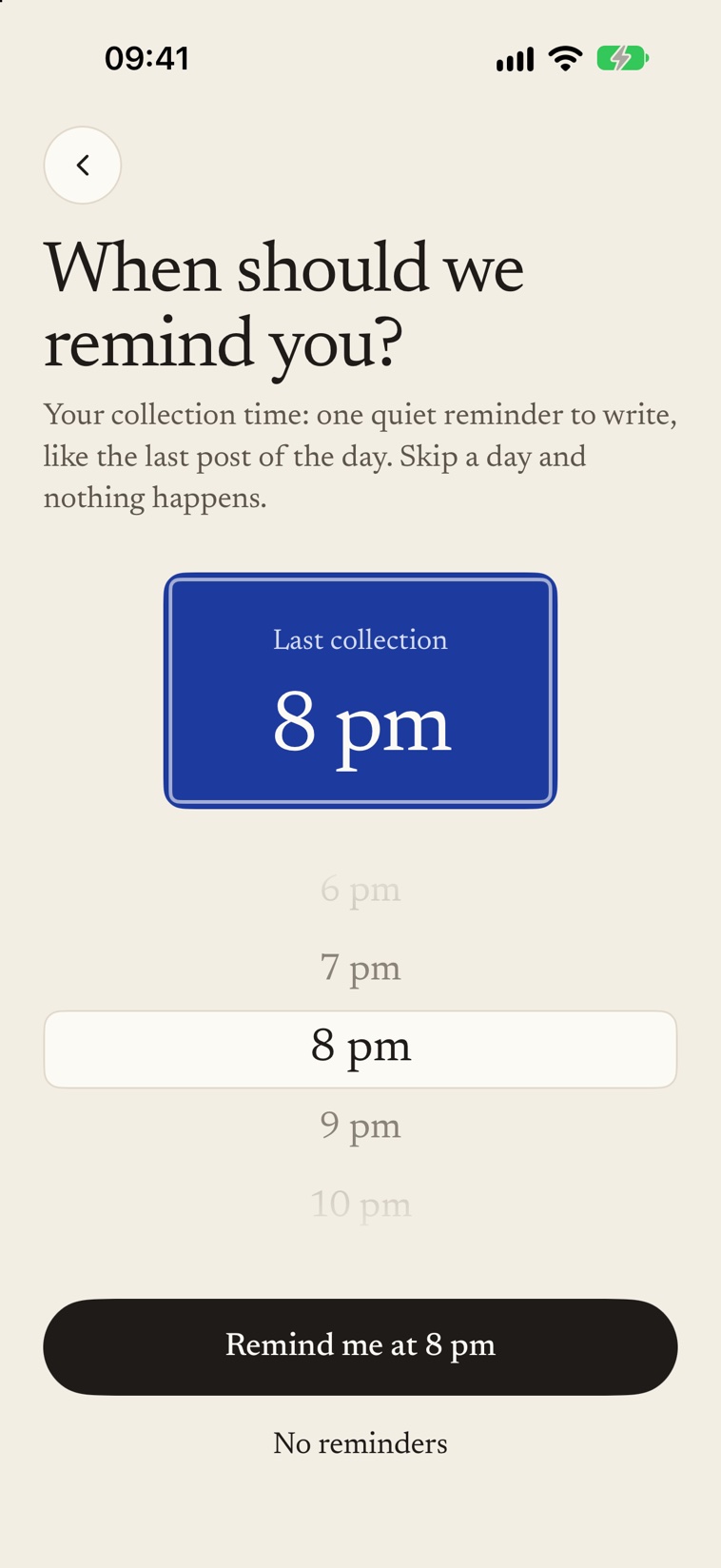
One quiet reminder, or none.

The only reminder is "last collection": one a day, at a time you choose, like the last post of the day. The screen says it plainly: skip a day and nothing happens.

Why: v1's notifications protected a streak. This one just reminds you the postbox is there, and turning it off is a first-class choice.

Momento 2.0 setup screen: 'When should we remind you?' One quiet reminder to write, like the last post of the day; skip a day and nothing happens. A time picker set to 8 pm, a 'Remind me at 8 pm' button and a 'No reminders' option.

Rebuild natively so one price can last.

v1 relied on a hosted real-time database and paid photo storage, and that backend was being wound down. A one-time price can't fund a server forever. So I rebuilt Momento in SwiftUI with SwiftData, storing everything in the user's own iCloud. Voice notes are transcribed on the device. Existing customers keep the same purchase, and an importer brings their Momento 1 notes across.

Why: the business model and the architecture have to agree. With no database to host, running costs stay close to zero.

Keep the AI small, safe and paid for.

The one AI feature, Sunday's letter, runs on a small server I wrote. Before it answers, the iPhone proves it is a genuine copy of the app (Apple App Attest), and the server checks the purchase and a per-device limit. The prompt is constrained and every reply is checked before it reaches the user.

Why: an open AI endpoint on a pay-once app is a cost leak and a privacy risk. Locking it to real, paying devices keeps both under control.

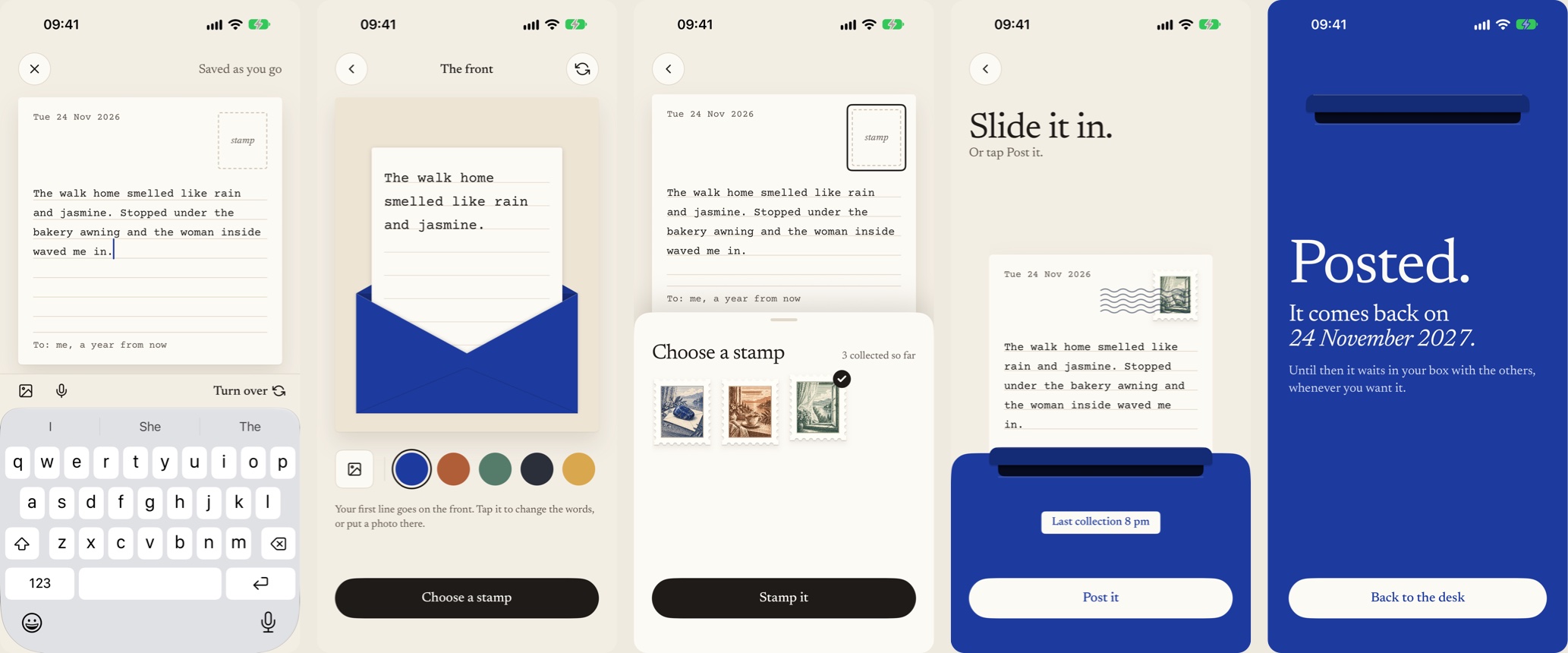
The Momento 2.0 loop in five screens: typing today's card, choosing a blue envelope for the front, choosing a stamp, sliding the card into the postbox, and 'Posted. It comes back on 24 November 2027.'
The 2.0 loop in the current TestFlight build: write, choose a front, stamp it, post it.
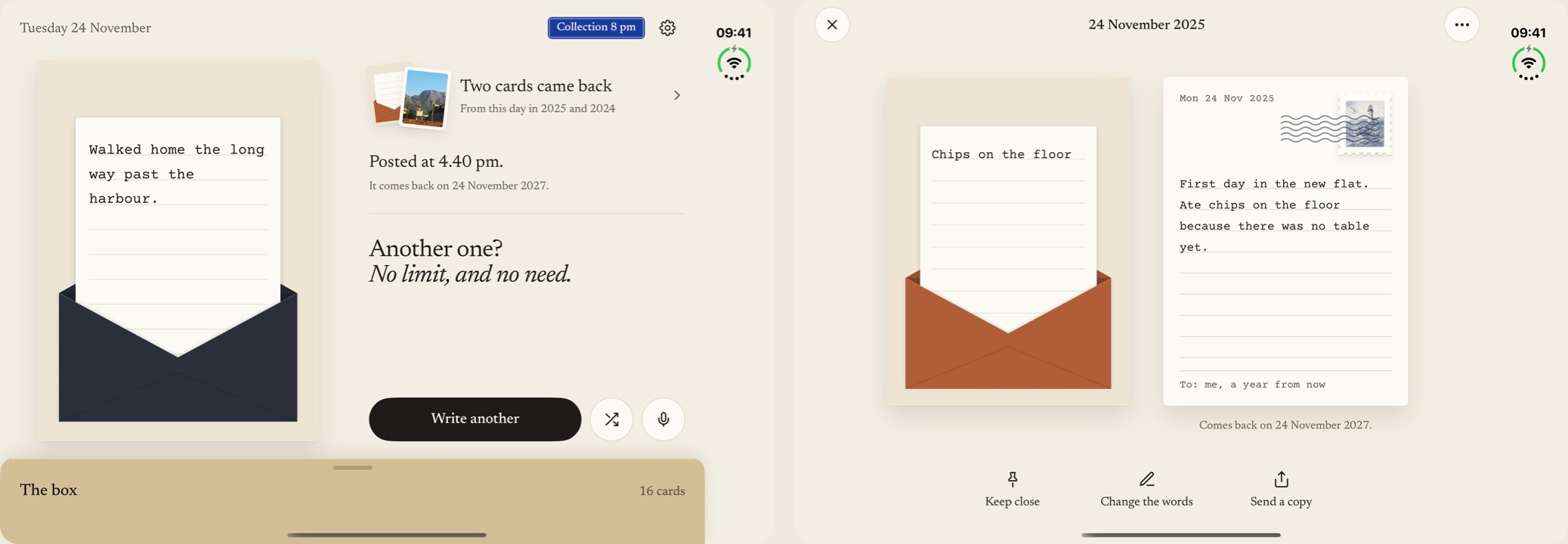
Momento 2.0 on iPhone Duo, opened flat: the desk with today's card on the left and what came back on the right, and a card shown front and back side by side with Keep close, Change the words and Send a copy.
On iPhone Duo the desk and each card open out across both screens.

How it was built and checked.

Concept first

2.0 was designed as 48 screens and three clickable prototypes before any code. Two rounds of AI tester personas then used the built app and logged problems, which I fixed and re-tested.

A server with no dependencies

The letter, export and device-check endpoints run on Vercel with no new packages: App Attest certificate checks, signed single-use challenges, StoreKit receipt checks and rate limits, written and reviewed line by line.

Bugs worth knowing about

A redirect from www to the bare domain silently dropped the sign-in header and broke the Momento 1 import. The fix: call the domain directly. 86 tests pass on 1.6, and 14 unit tests guard 2.0's core rules.

What I built, and what I learned.

What I learned

  • Define the person before the features. One sentence about who Momento is for removed half of v1.
  • Mechanics carry tone. Copy said "gentle"; the streak said "don't fail". Users believe the mechanic.
  • Architecture is pricing. A pay-once app needs near-zero running costs, and that decided the rebuild.

What I would do next

  • Release 1.6 and fix the store page. The listing still describes the old subscription plans.
  • Test 2.0 on real devices. Voice, Face ID, iCloud across two phones, purchase and restore.
  • Measure the return. The real test is whether cards coming back bring people back.

The App Store has version 1.5. Version 1.6 was submitted to Apple in October 2026, and 2.0 is in TestFlight with internal testers. Momento's sales are very small, so this case study shows design and engineering decisions rather than claiming results.

Want to talk about this work?

I'm happy to walk through the evidence, the design decisions and the trade-offs, or show the app running on my phone.