← All product work

The Sound Lounge learned that every song deserves a verdict.

The Sound Lounge is an iPhone app for finding one great new song without a research project. You hear short previews, judge each one, and send your finds to Apple Music.

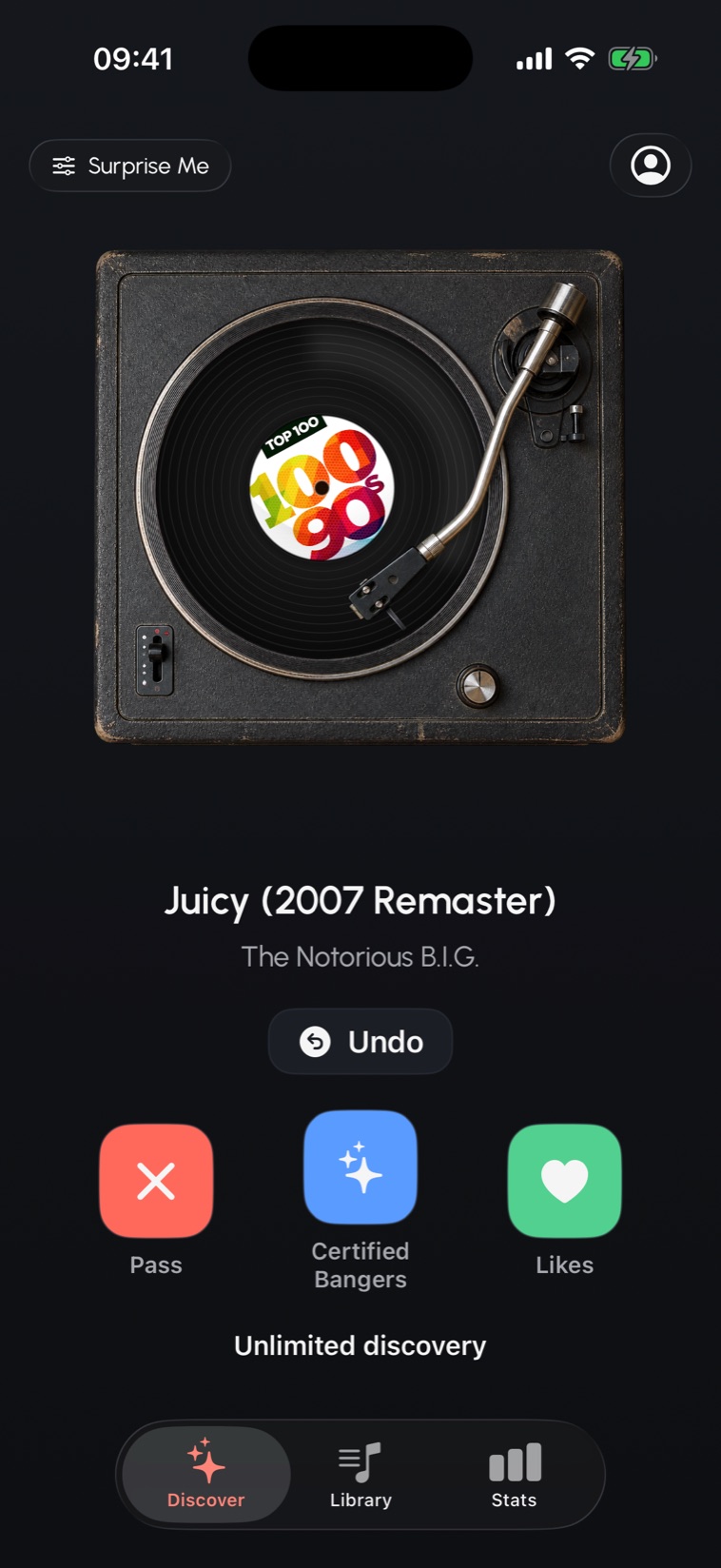
The Sound Lounge v1: one record on a turntable with Pass, Certified Banger and Like buttons underneath.
Pass, or like.1.0, live
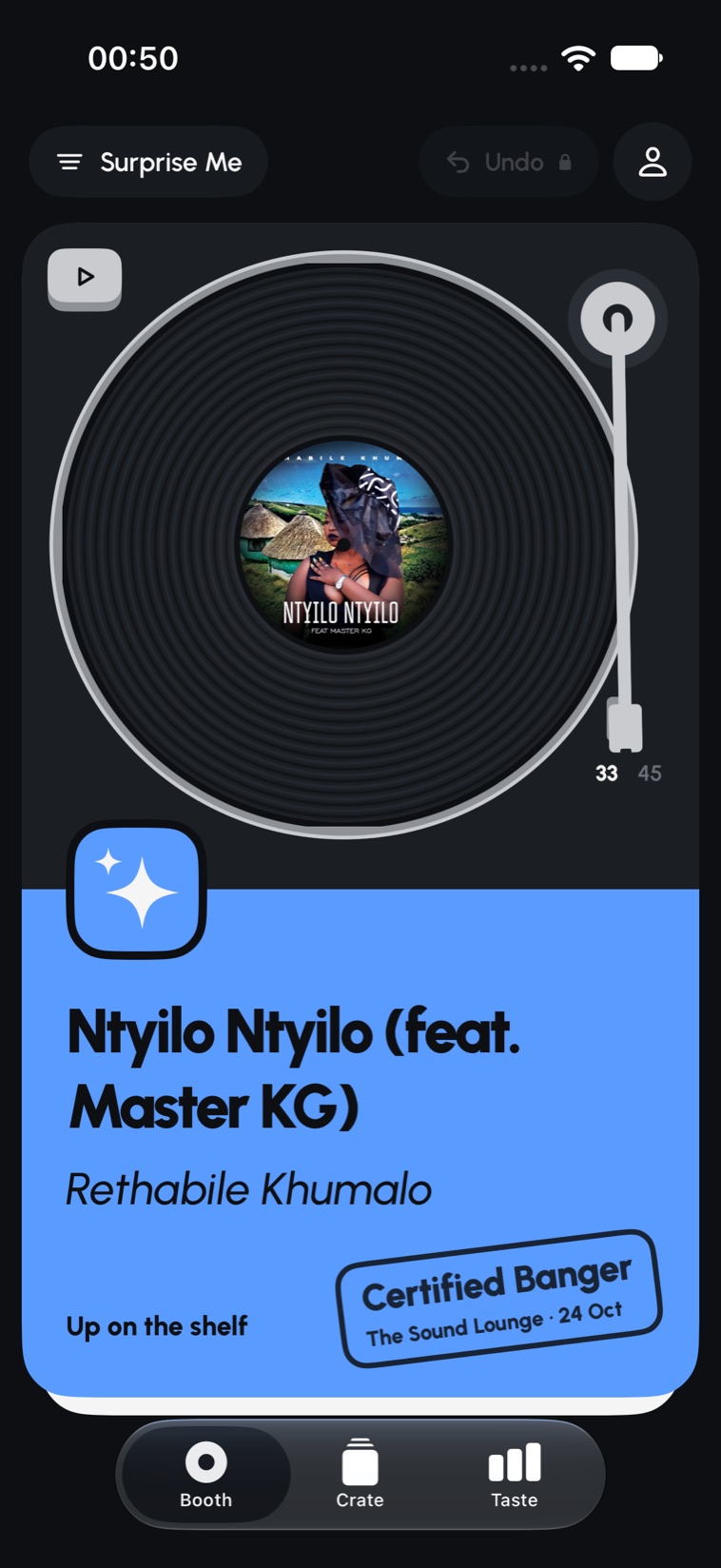
The Sound Lounge 1.1 booth: a record spins on a platter and a blue sleeve carries a Certified Banger stamp.
Certified Banger.1.1, in TestFlight
Role
Founder. Product, UX, UI, engineering, content and growth
Platform
iPhone (SwiftUI, MusicKit)
Timeline
v1 August 2026. 1.0.2 live October. 1.1 in beta from October
Team
Me, with AI coding agents that I direct and review

Where v1 stood

The discovery engine worked, and the few people who got in loved it. But onboarding lost most people, the store page contradicted the app, and almost nobody saw it.

What I changed

I rebuilt onboarding and the paywall around moments of intent, then redesigned the app as a listening booth where every song gets a stamped verdict.

Where it is now

1.0.2 is live. The 1.1 booth is in beta. A YouTube channel I built for the brand passed 65,000 views and found a format that works.

Loved by the few who got in.

Version 1 went live in August 2026. You picked artists you like, then swiped through previews: Pass, Like, or Certified Banger for the songs you'd tell a friend about. A day later I made discovery free and unlimited, because a daily limit was blocking the one thing the app is for.

The early data had two sides. The two people who finished setup used it heavily: 37 sessions, 411 songs heard, 126 likes and 37 Certified Bangers. But of the first five who opted into analytics, only two got through setup. It asked you to type ten artist names into an empty screen, and sold Premium on page three before you'd heard a note. The store page still promised a 20-a-day limit that no longer existed.

34App Store product page views in 90 days
14first-time downloads
5 → 2opted-in users who finished setup
411songs heard by the two who did

Source: App Store Connect, 90 days to 16 September 2026, and opt-in analytics to 27 August 2026. Small numbers: I read them as signals, not rates.

1.0.2: fix the funnel.

The first next version changed no visuals. It moved every sales moment to where the listener already wanted something.

Setup in two taps, not ten names.

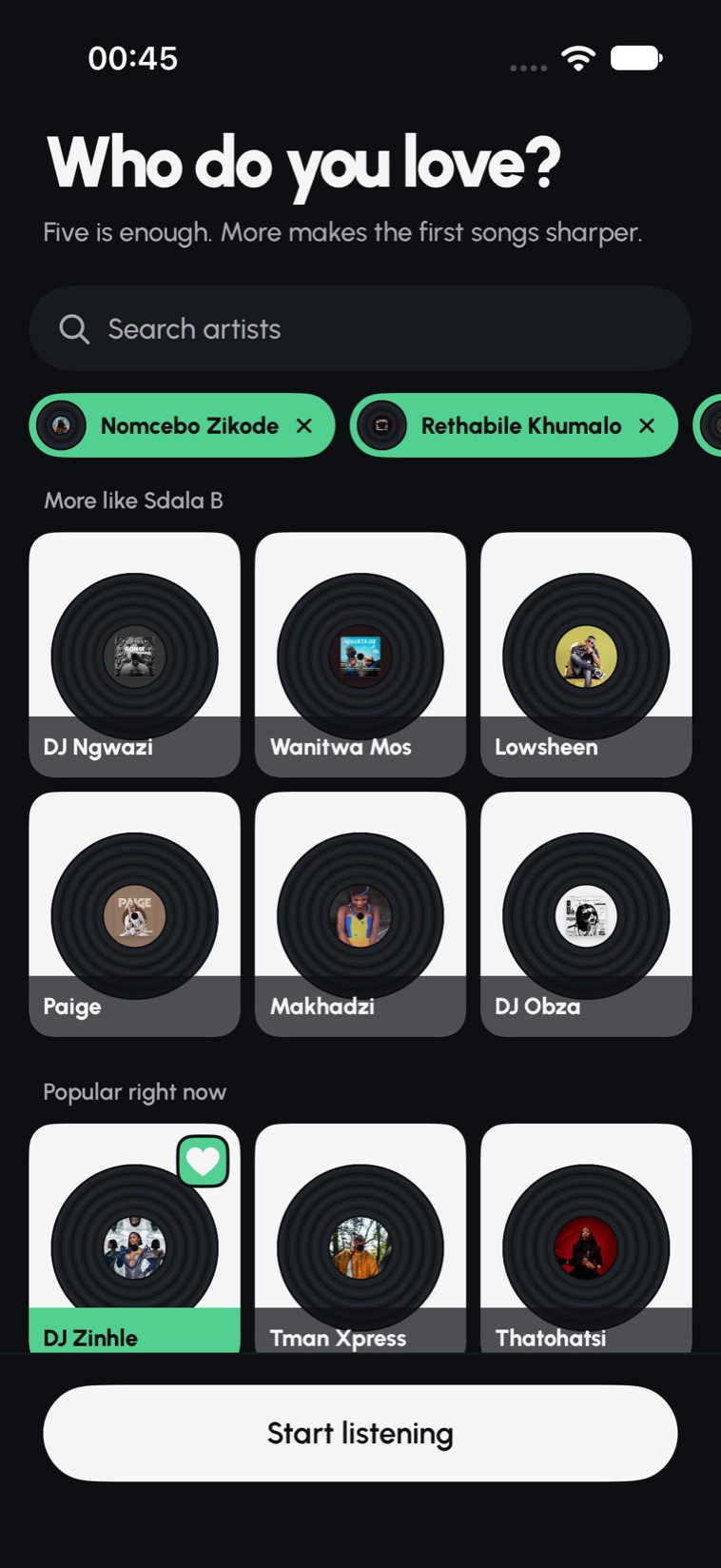
Onboarding went from three pages to two, and the Premium page was removed. Artists now come from tappable grids of popular, recently played and similar artists, and five is enough to start. The mood picker waits until the second session.

Why: the empty search box was the biggest drop. Recognising is easier than remembering.

Artist picker in onboarding: a grid of tappable artists with a ready-to-start button.

Upgrade moments, not a wall.

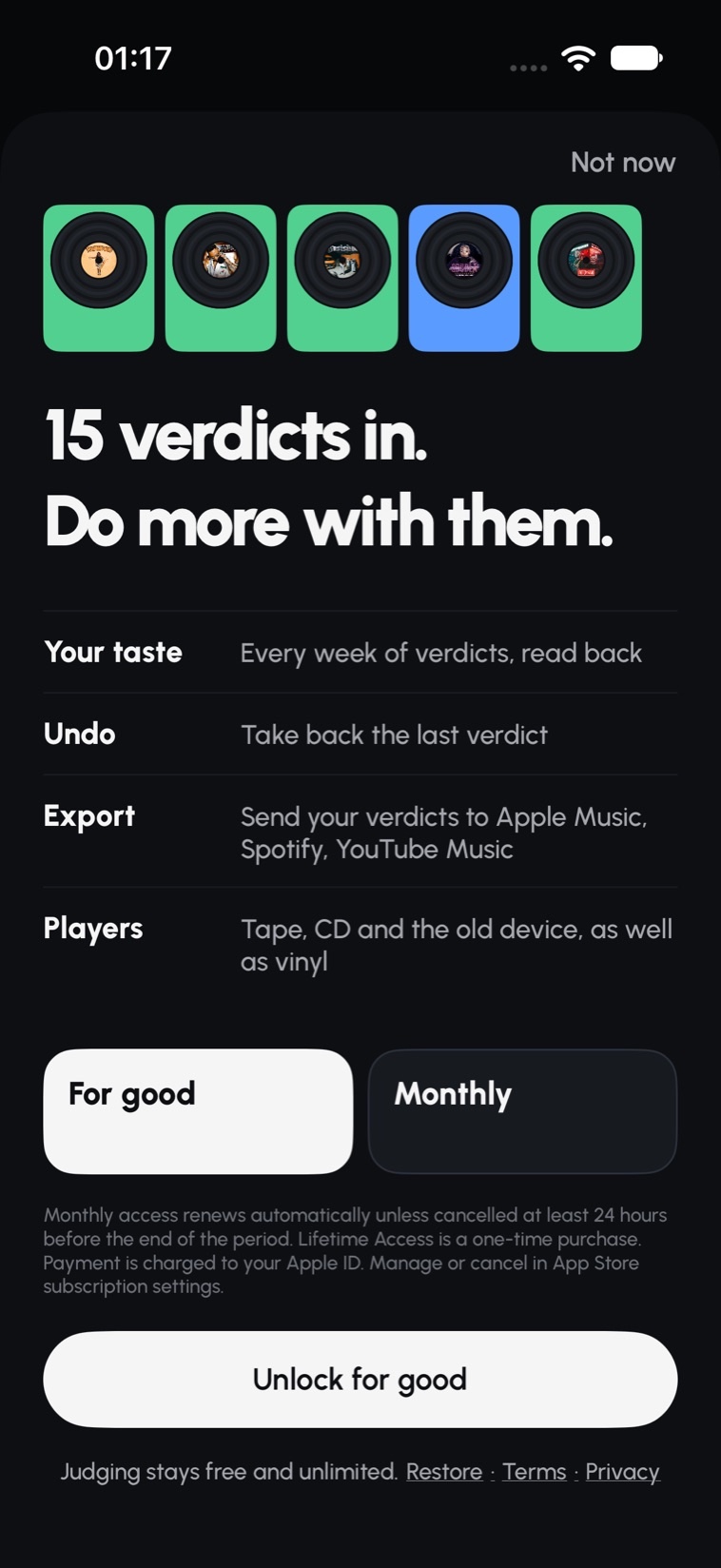
Premium now appears when someone reaches for it: undoing a swipe, opening their stats, or saving their finds after 10, 25 or 50 discoveries. The paywall fans out the listener's own album art, shows what they've found ("11 finds saved, 6 Certified Bangers"), and finishes the action they started once they buy.

Why: a paywall about your music sells better than one about features. Every entry point is tagged, so I can see which moment converts.

The Sound Lounge Premium paywall, built around the listener's own saved music.

Ask for a review only when it's earned.

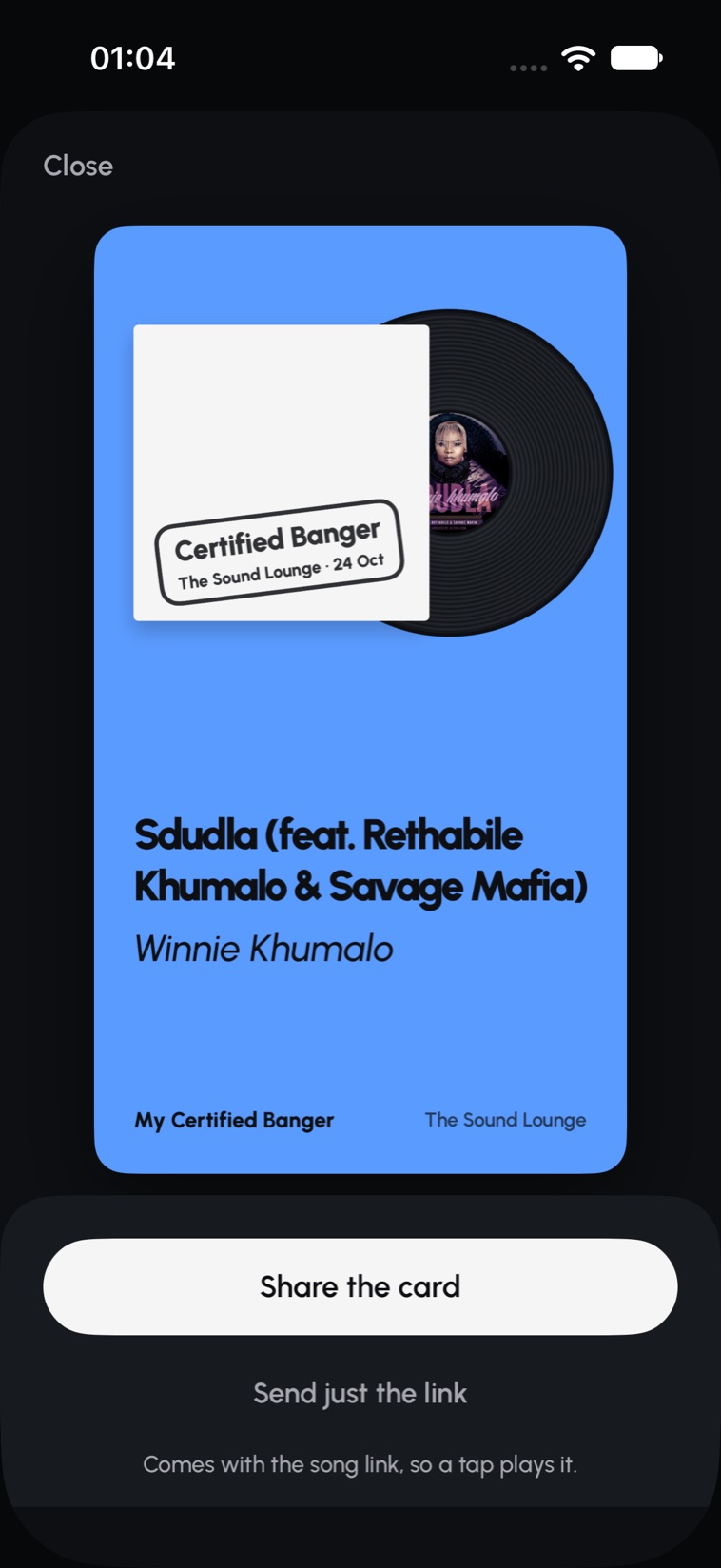
The app asks for a rating after a fifth Certified Banger or a finished Apple Music export, once per version. Songs can be shared with a tagged App Store link. And the store copy was rewritten to match the app: discovery is free and unlimited, export is Premium.

Why: ask happy people at a happy moment, and never let the store page promise something the app doesn't do.

Share screen in The Sound Lounge for sending a song to a friend.

1.1: a listening booth.

v1 looked like a swipe app with a turntable on top. For 1.1 I asked what the app is, as an object. The answer: a booth where every song gets a verdict.

v1 A swipe deck

Object
A card with three buttons
Feedback
The card disappears
Where songs go
A list in the library
Artwork
Small cover inside a player skin

1.1 A listening booth

Object
A record on a platter, the cover art as its centre label
Feedback
A rubber stamp on the sleeve, which floods with the verdict colour
Where songs go
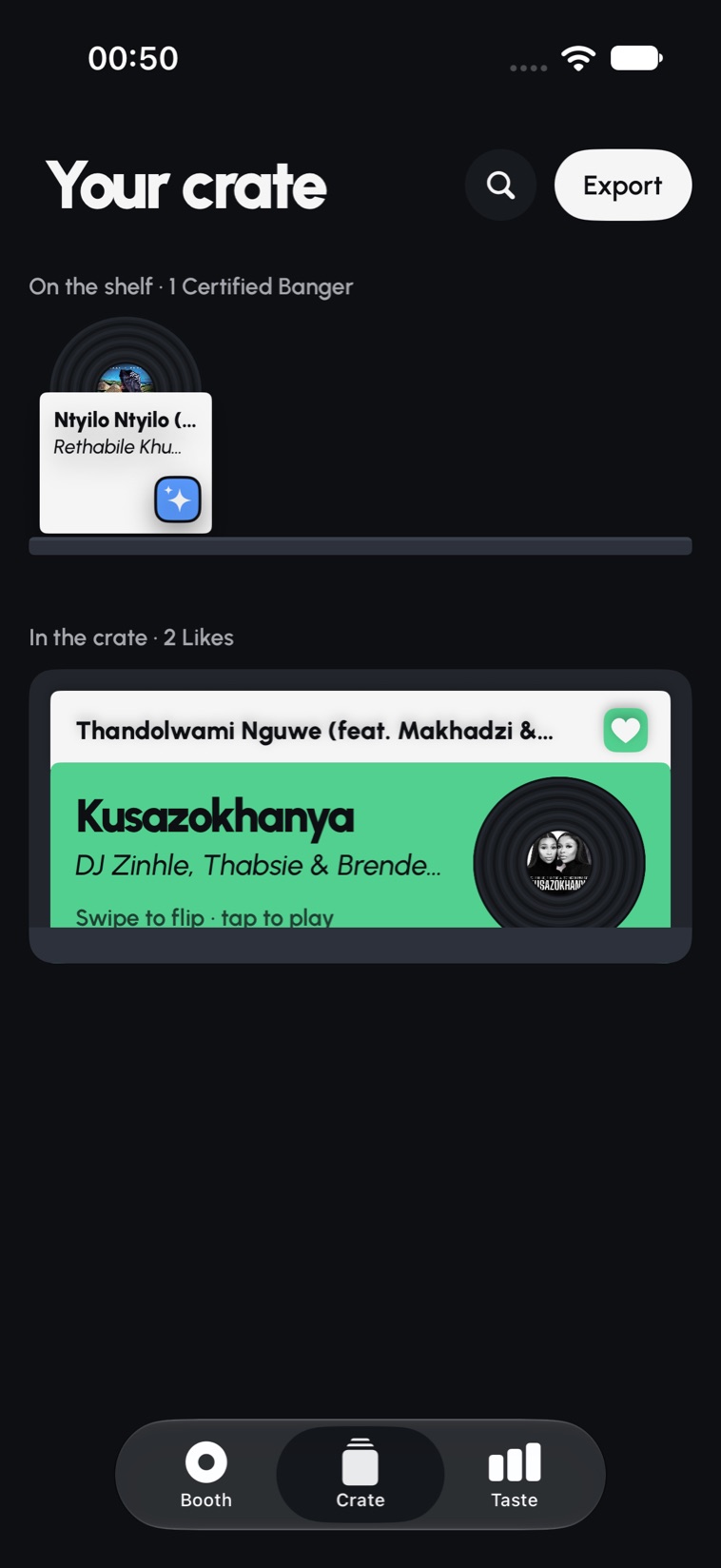
Likes into the crate, Certified Bangers up on the shelf, passes back in the box
Artwork
The cover art is the record

Design within what the data allows.

My first booth concept used artist photos. Then I checked: Apple Music doesn't give you enough of them to rely on. So the record's centre label became the album cover, which every song has.

Why: a design that breaks on half the catalogue is a mockup, not a product. Checking the API before polishing saved a rebuild.

The crate in The Sound Lounge 1.1, holding the songs the listener liked.

One studio language across my apps.

The booth follows rules I wrote for all my apps: one object you operate, a mechanical verb, honest materials. Simul has a camera and a darkroom, Momento has a postbox, The Sound Lounge has a booth.

Why: a shared design language makes each app faster to design and makes the portfolio feel like the work of one studio.

Building the audience in public.

The app's real bottleneck was attention. So I launched a YouTube channel under the same brand, about the stories behind albums, with real app screens and no copyrighted music.

I treated the channel like a product, with a hypothesis, a measure and a kill rule for every format. Long-form videos lost: in the first 28 days, Shorts got about 40 times more views. So long-form was paused. Then I compared Short formats. Album backstories with stakes (an album shelved for a decade, a song that switches halfway) had a median of 285 views, against 91 for "where to start" guides. Six of fourteen backstories passed 1,000 views. None of the guides did. The guides were dropped.

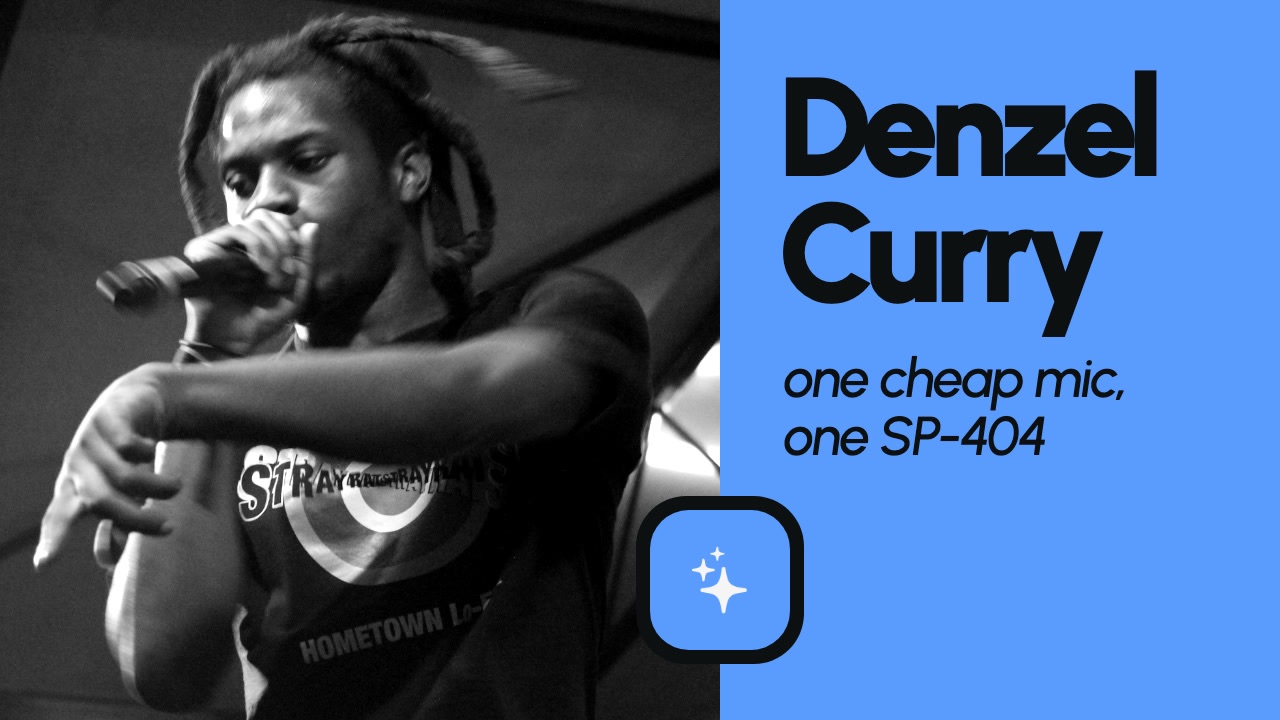
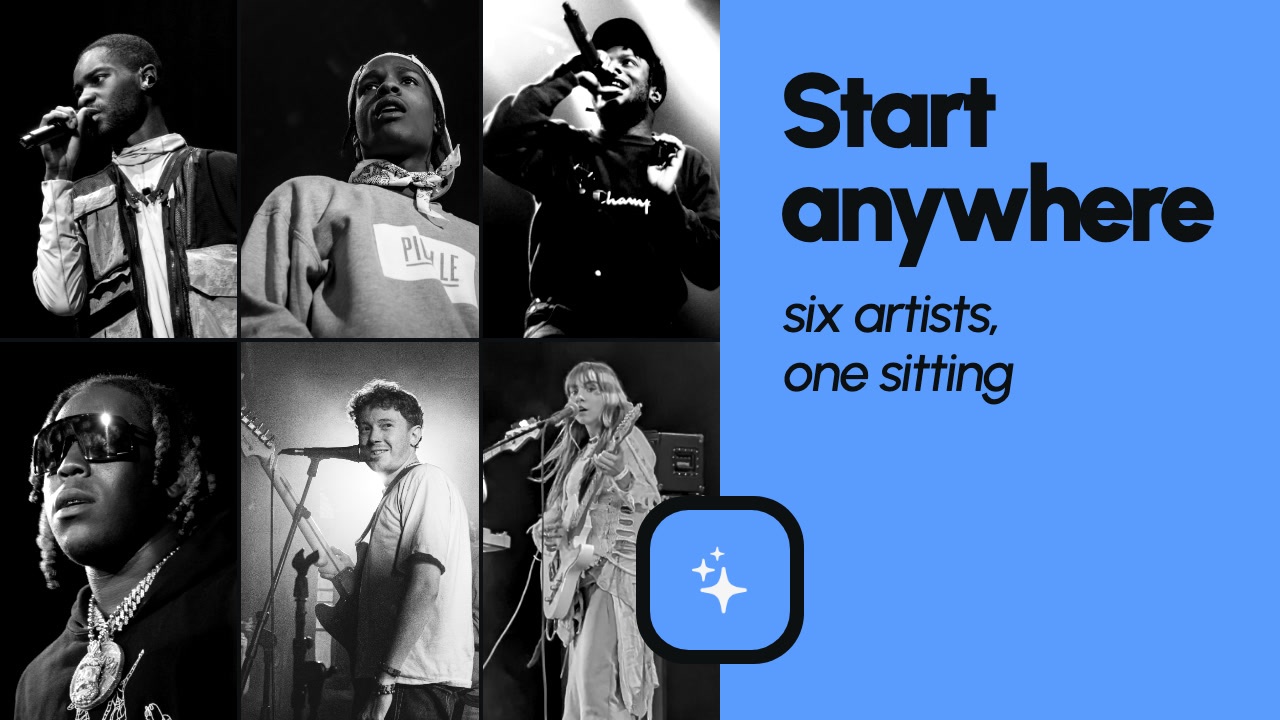
I also gave the channel the app's design language, "The Verdict": a black-and-white artist photo, a flat verdict-colour field and the app's real button on the seam. Views in the next eleven days averaged 1,462 a day, up from 716.

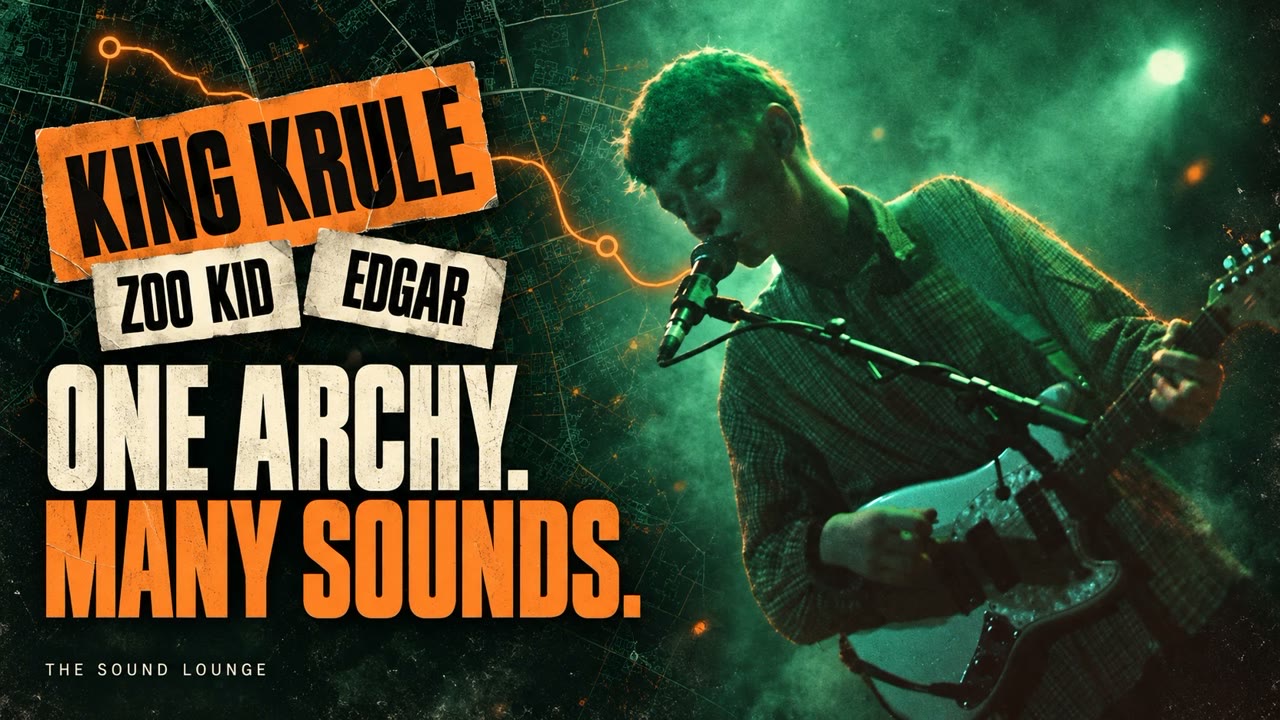
Earlier thumbnail for a King Krule episode, before the Verdict system.
Before: the first thumbnails.
Verdict thumbnail: black-and-white photo of Denzel Curry beside a blue panel with the hook 'one cheap mic, one SP-404'.
After: The Verdict system.
Verdict compilation thumbnail: a grid of six black-and-white artist photos, 'Start anywhere'.
The same system on a compilation.
65,783channel views across 140 videos
3.1×median views, backstories vs guides
2×daily views after the Verdict redesign
~40×Shorts vs long-form views, first 28 days

Source: YouTube Analytics, to 13 November 2026. The daily comparison covers 25 October to 4 November against the 13 days before.
The engine underneath.

Recommendations that forgive

Each Like and Certified Banger raises an artist's weight, and passes lower it with a cap. An artist is only hidden after two passes and no positive signal, so one bad track doesn't banish anyone. Each deck mixes about half familiar, a third adjacent and some wildcards, with cool-downs so one artist can't dominate.

Export that doesn't lose songs

Finds go to an Apple Music playlist, matched by catalogue ID, then by ISRC, then by strict search, with duplicates removed. There's also a CSV and a guided handoff to other services.

Tested before I touch it

Four AI tester personas (first-time listener, crate builder, free user, code reviewer) ran the 1.1 booth. Thirteen of thirteen user journeys pass on both a large iPhone and an iPhone SE, plus 30 unit tests.

What shipped, and what I learned.

What I learned

  • Sell after the value, not before. Moving Premium from onboarding to moments of intent was the cheapest fix with the clearest logic.
  • Distribution is a design problem. The same packaging thinking that shapes an app screen doubled the channel's daily views.
  • Let formats compete. Comparing medians, not hunches, killed two formats I liked and kept the one that worked.

What I would do next

  • Connect channel to app. Views are growing but few viewers reach the store yet. Test a direct, tracked link in every Short.
  • Ship the booth. Answer the open questions from the tester round and measure verdicts per session against 1.0.2.
  • Turn on the free trial. The paywall already supports it; the store offer still needs to be set up.

App numbers are from App Store Connect and opt-in analytics, and they are small, so I don't claim conversion gains. The channel numbers are from YouTube Analytics. The 1.1 booth is in TestFlight with internal testers and has not been released yet.

Want to talk about this work?

I'm happy to walk through the evidence, the design decisions and the trade-offs, or show the app running on my phone.