← All product work

Planetfall went from watching timers to walking eight worlds.

Planetfall is a story-led space game for iPhone that I design and build on my own. Version 1 was an idle game: tap, wait, upgrade.

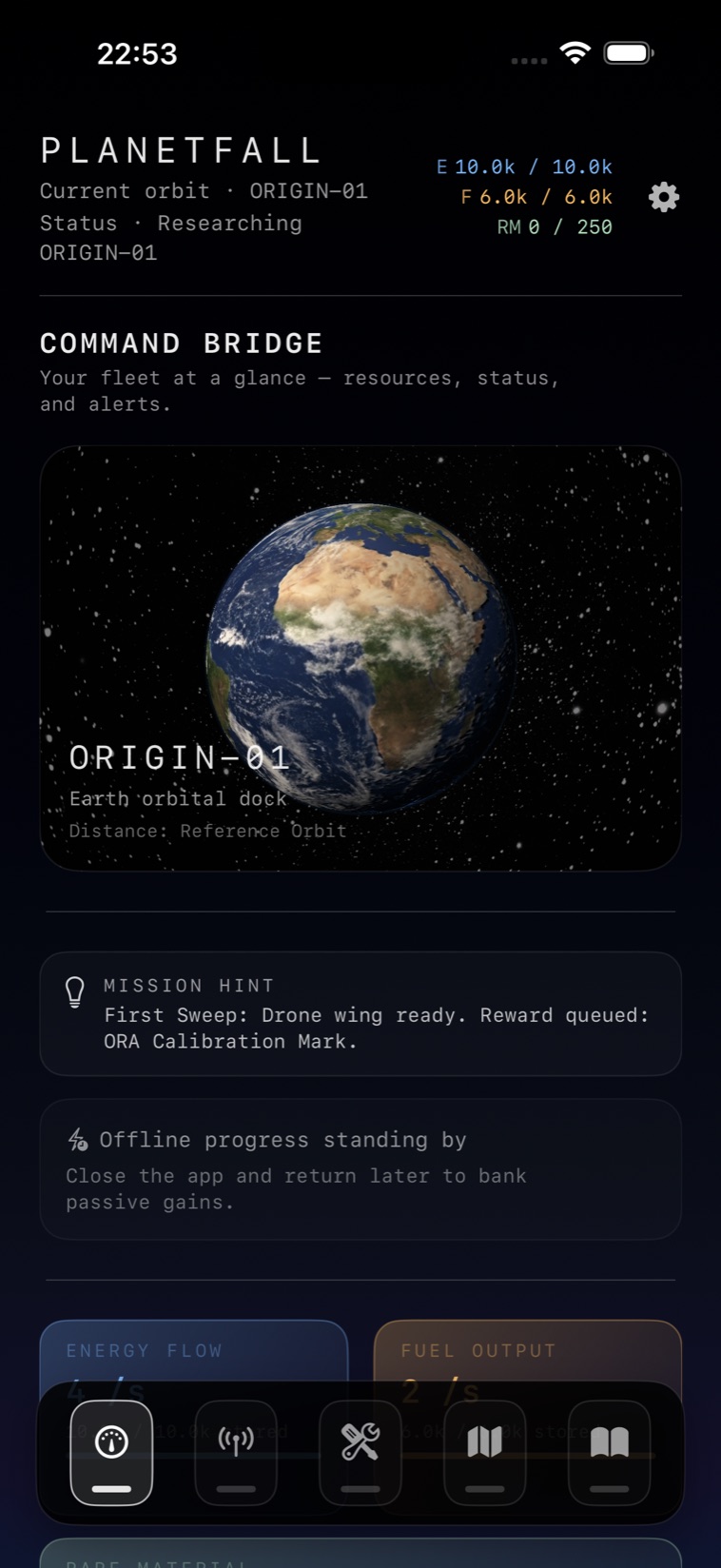
Planetfall v1 command bridge: Earth, resource counters, a mission hint and an offline progress note.
Wait for the numbers.1.0, live
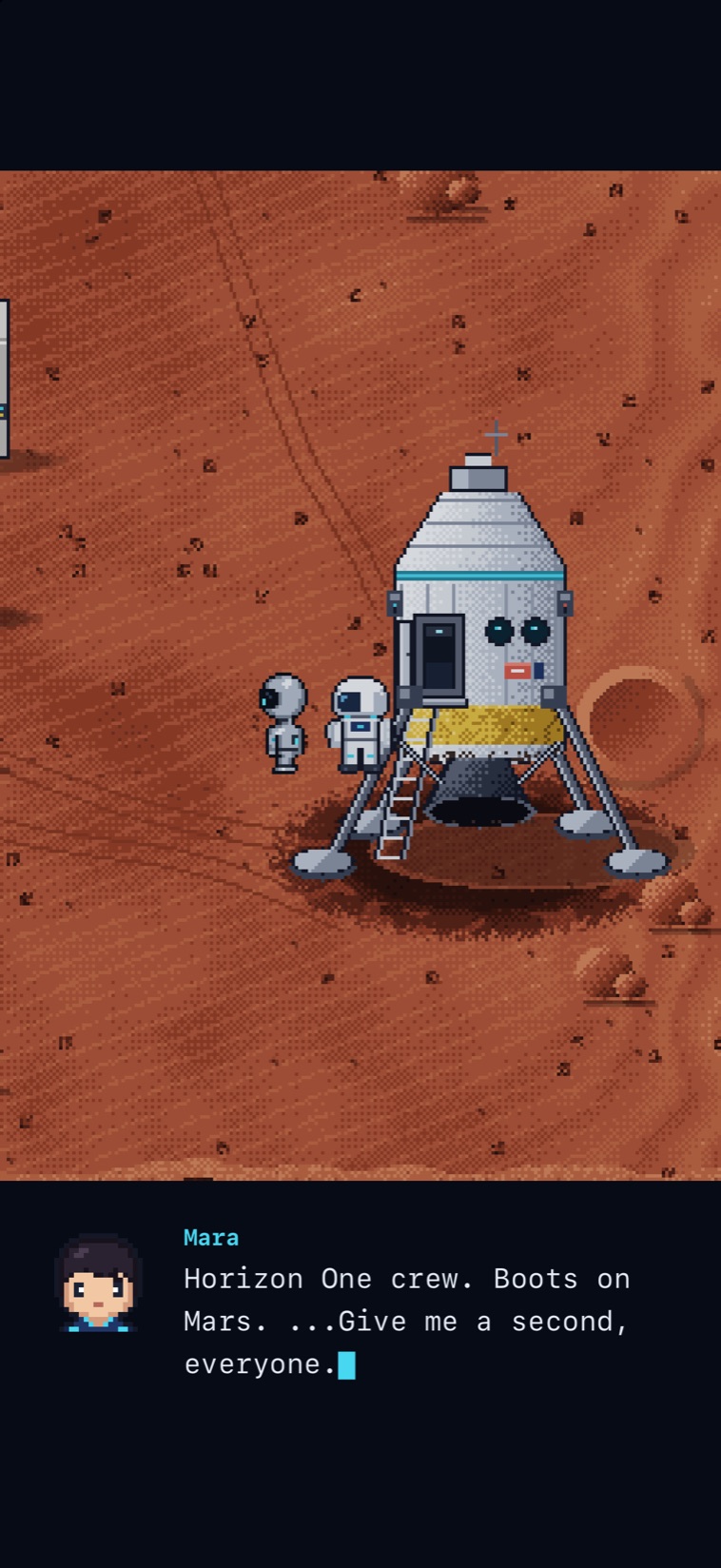
Planetfall Act I: the crew stand beside their lander on Mars while Mara says 'Boots on Mars'.
Boots on Mars.Act I, in TestFlight
Role
Game designer, writer, art direction and engineering (solo)
Platform
iPhone (SpriteKit + SwiftUI)
Timeline
v1 on the App Store February 2026. The new version built October 2026
Team
Me, with AI coding agents that I direct and review

Where v1 stood

An idle game with a story hidden in a log tab. About 174 people downloaded it in eight months, and almost none of them paid.

What I changed

I found the missing piece, a core action, and rebuilt the game around walking, talking and solving, with the story in the world instead of in a menu.

Where it is now

All of Act I is built and in TestFlight: eight worlds, fifteen puzzles, 64 hidden finds, and a test that plays the whole act by itself.

A good story stuck behind a timer.

Version 1 launched on the App Store in February 2026. You ran a starship from a command bridge: energy, fuel and rare material ticked up each second, you bought upgrades, and you sent the ship to planets on real-time trips from 90 seconds to 46 hours. The story, about a crew leaving a recovered Earth, lived in a Records tab as text logs.

In the summer I wrote a four-act story bible and produced art for a redesign, but kept the same command-deck structure. When I reviewed it honestly in October, the problem was obvious: the game had no core verb. Players waited, they didn't decide. And I had made art before proving the game was fun.

~174downloads in the first eight months
2in-app purchases, ever
€2.80total proceeds
46 hoursthe longest wait between decisions

Source: App Store Connect sales report, pulled 11 October 2026, covering February to October 2026.

From a dashboard to a place.

I built a small walk-and-talk prototype in a day, played it on my phone, and liked it more than anything in v1. That decided it.

v1 An idle game

Core verb
Tap upgrade, then wait
Story
Text logs in a Records tab
Progress
25 near-identical upgrade levels per track
Session
Check in, collect, leave
Money
Pay to skip the wait

Act I An exploration game

Core verb
Walk, talk, find, solve
Story
Spoken by the crew, with choices that pay off later
Progress
Eight worlds, each with its own hazard and puzzle
Session
One planet: a voyage, a mission, a hook to the next
Money
Act I free. The rest of the story as one unlock

Four choices that made it a game.

Write a standard for every planet.

After playing Mars, I wrote a Planet Standard that every world has to meet: a voyage in, a region of about 50 by 35 tiles, a darker hidden area, six to eight finds, one or two hard new puzzles, a crew choice with a later consequence, and a hook to the next world.

Why: one person building eight worlds needs a quality bar that doesn't depend on mood. The standard made the last planet as good as the first.
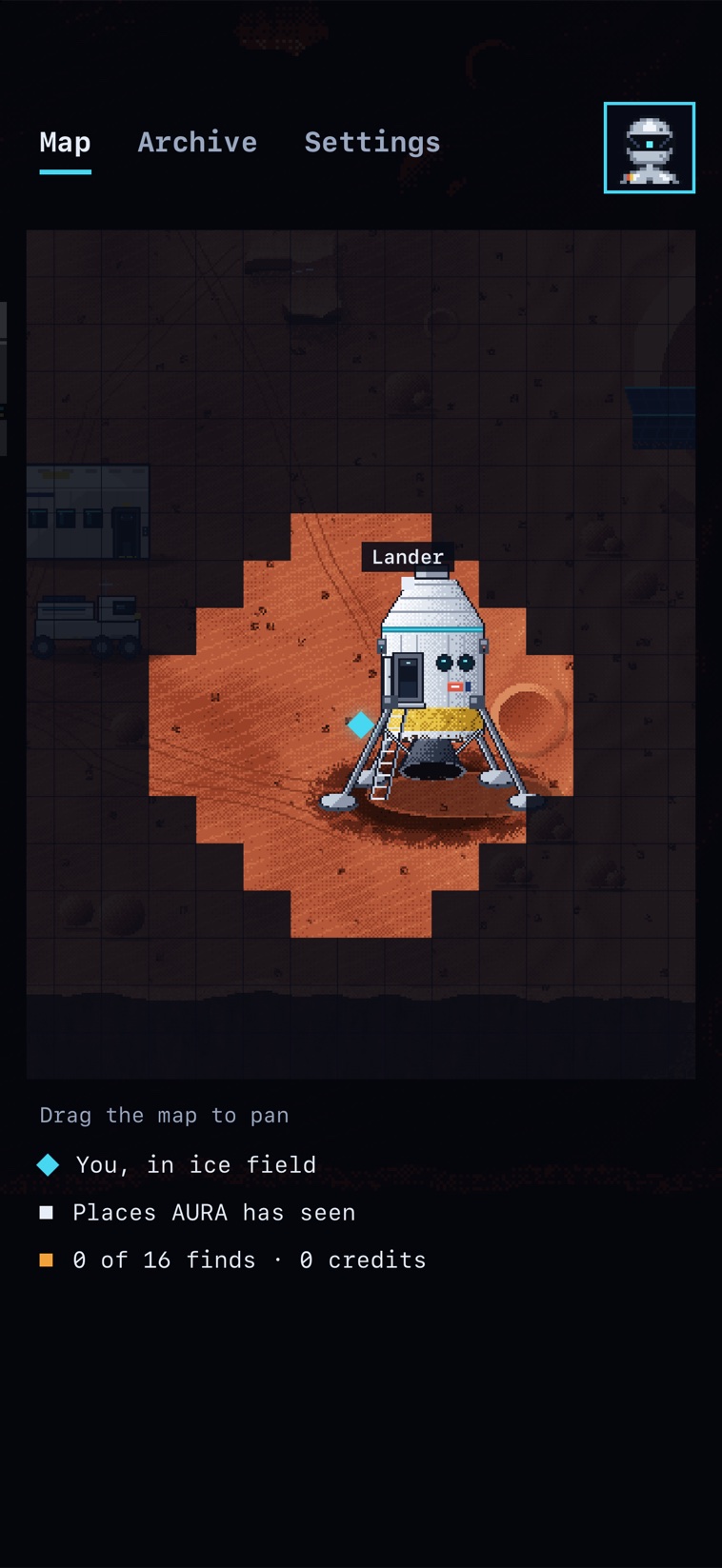
The deck map: the lander on a patch of explored ground, with places AURA has seen and 6 of 16 finds.

Make each planet's danger the mechanic.

Mars has a dark lava-tube cave. On Mercury and Venus you play as the robot AURA, because the heat and pressure would kill a person. Callisto has frost slides, Enceladus has geysers that knock you back, and on Triton the crust collapses under you.

Why: the setting should change how you play, not just how it looks. It also teaches the science without a lecture.

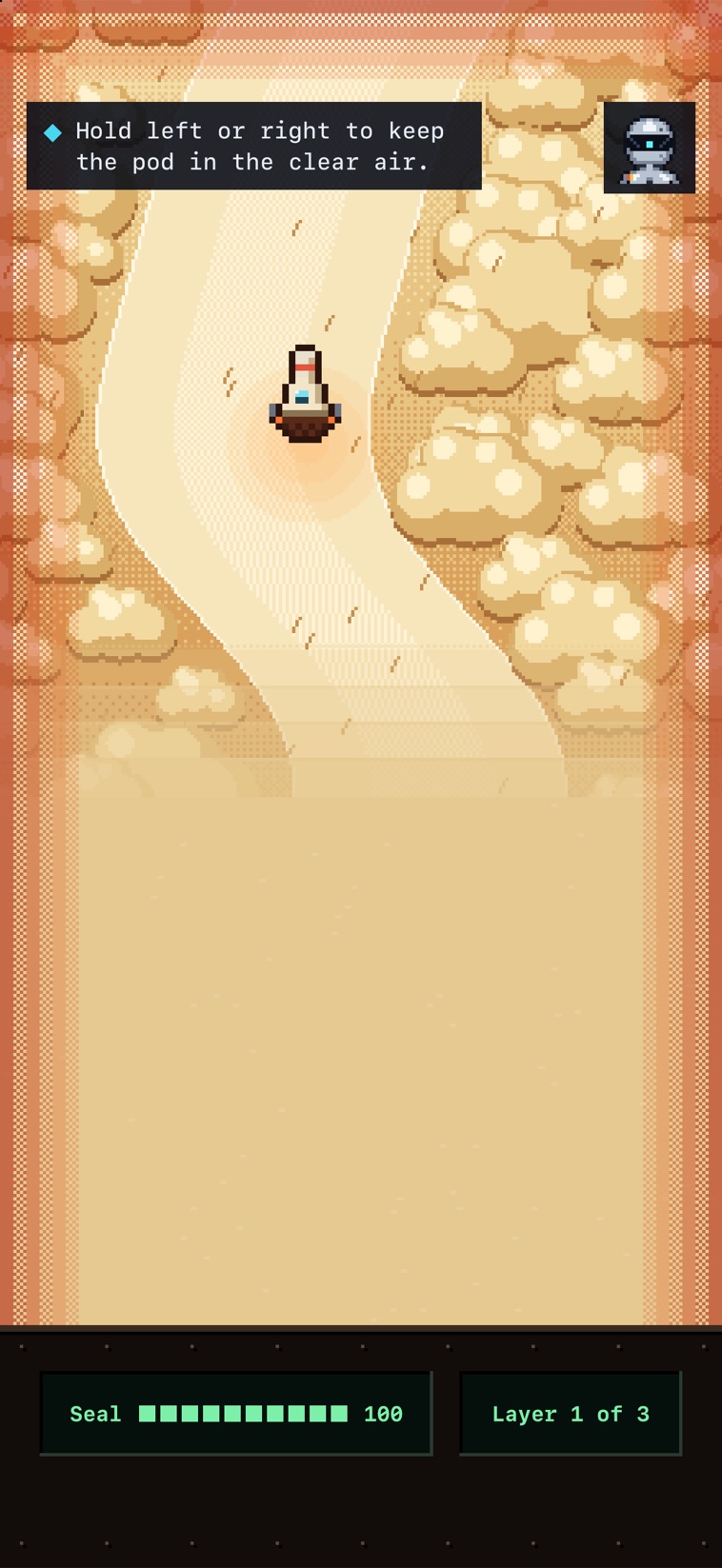
A descent puzzle: hold left or right to keep the pod in the clear air between banks of cloud.

Puzzles that are real work, with help that adapts.

Act I has fifteen mini-games, from wiring a door junction to tuning a lattice drive. Each is hard on purpose. After repeated failures it quietly eases, up to five steps, and every puzzle ends on a grade and a reaction from the crew.

Why: hard puzzles make players feel competent. Adaptive help keeps them from quitting. Playtests drove the tuning, like widening a laser cut's touch target from 14 to 22 points.

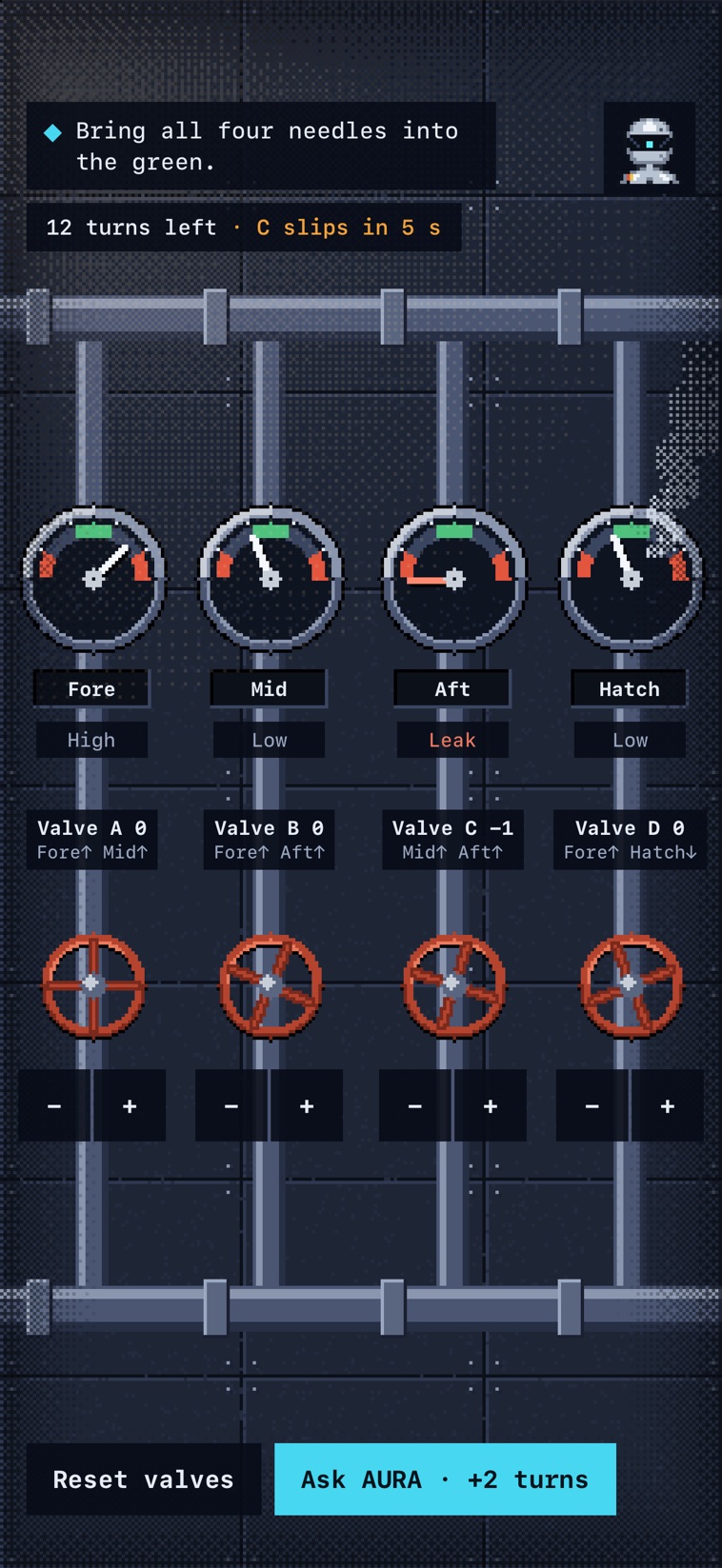
A valve puzzle: four pressure needles to bring into the green, with an Ask AURA button that adds two turns.

Nothing between you and the world.

The Quiet Deck redesign removed the panels. The world is full screen, the robot's face is the menu, the button says what it will do, and every puzzle happens in the world: the door is the door, the wire panel is a real panel.

Why: the earlier interface framed the world like a dashboard, which was v1's problem again. Removing chrome made it feel like a place.

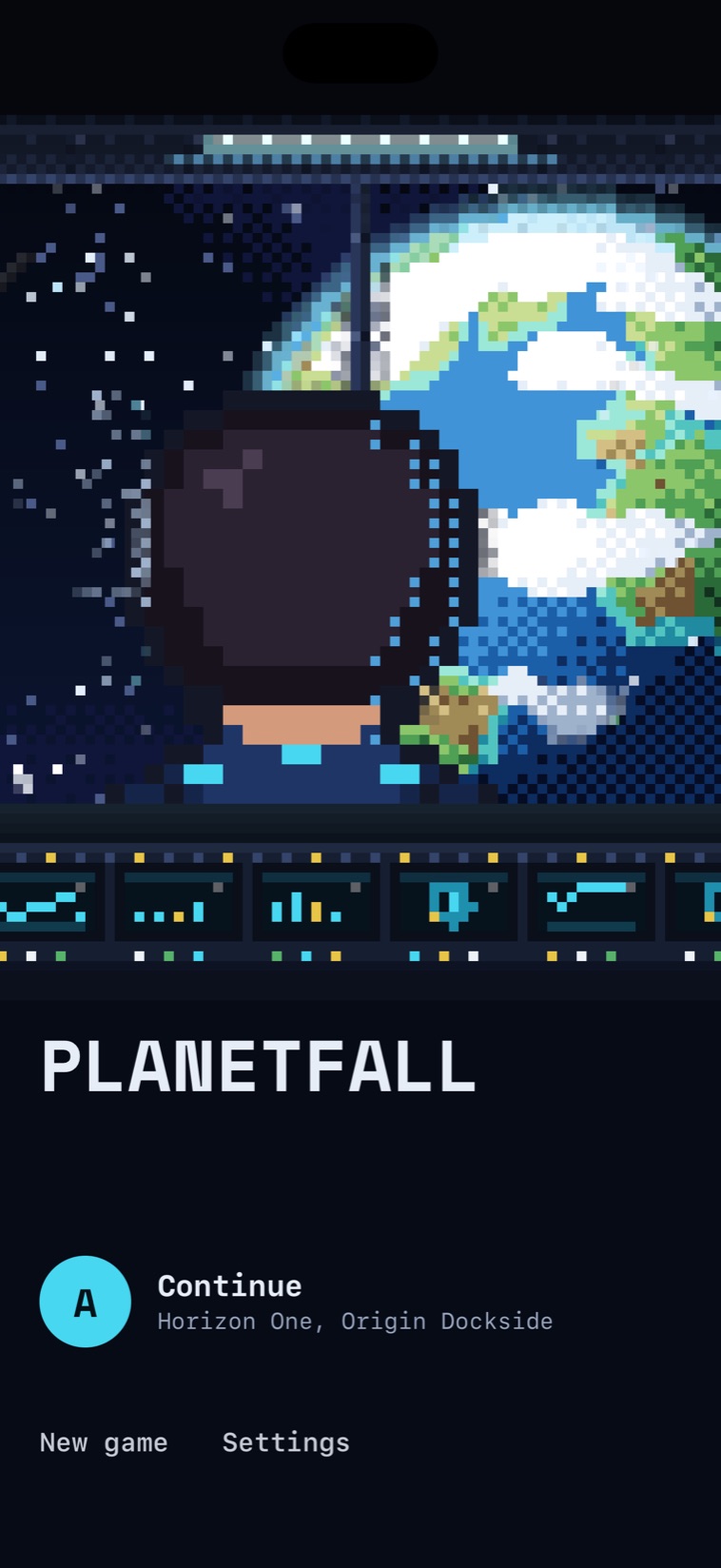
Planetfall title screen: Mara looks out of the ship's window at Earth, with a Continue button.

A game that tests itself.

Eight worlds is too much to replay by hand after every change. So I built the testing into the game.

Autoplay

A debug mode plays the entire act by itself: it walks, talks, takes branches and solves every puzzle, then reports what it found. Every build has to finish with all 48 archive entries and all eight result cards.

Start anywhere, quit anywhere

Launch flags start the game on any world. A save test kills the app mid-planet and checks it resumes. That test found that finishing a planet never saved.

Art and collision from one source

Pixel art is generated by code from one layout per map, which also writes the collision grid, so walls in the art are always walls in the game.

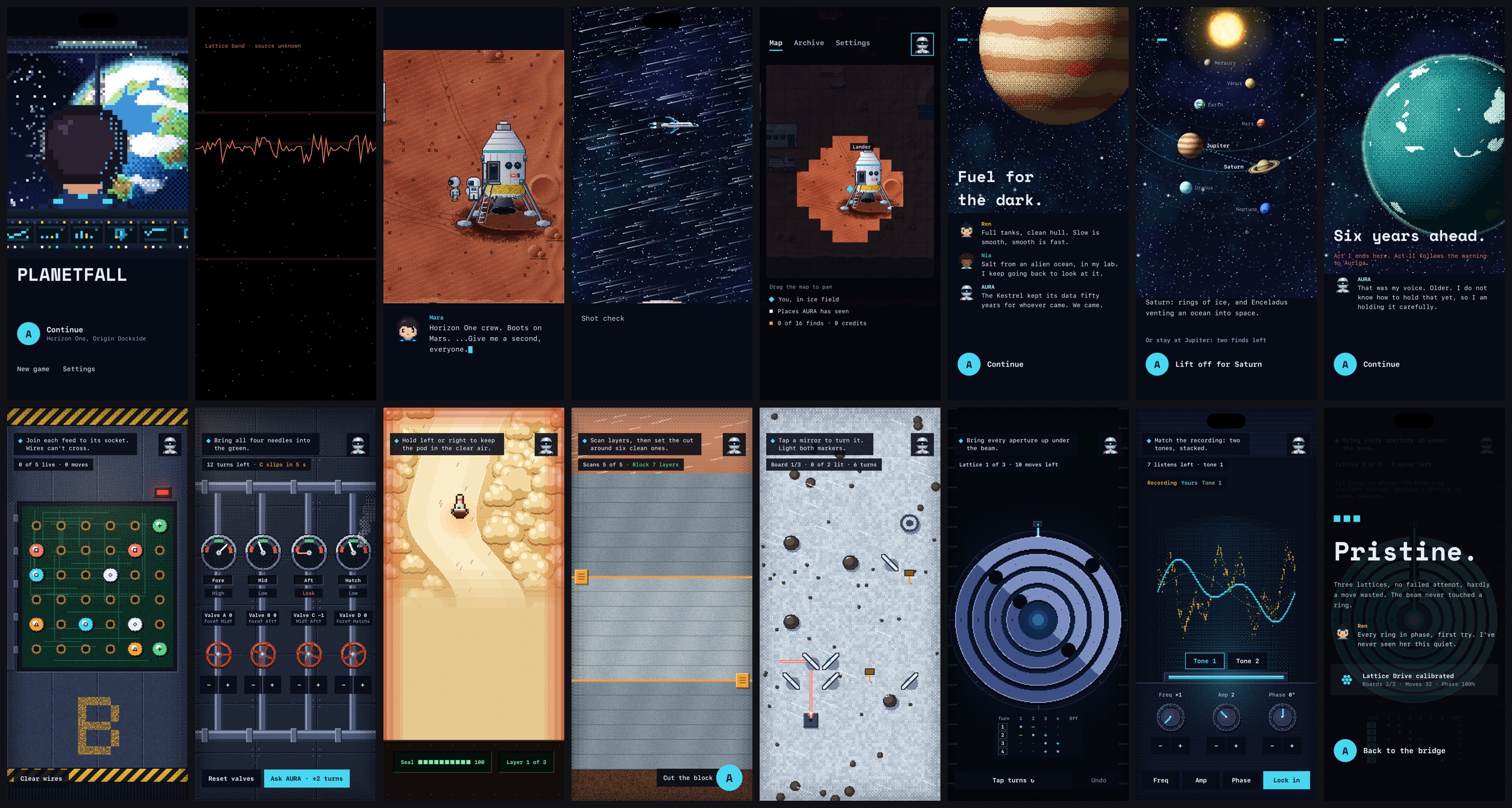
Contact sheet of the built Quiet Deck: title screen, signal, Mars, warp, map, planet result cards, end of Act I and many puzzle screens.
Act I as built, captured from the game.

What I built, and what I learned.

What I learned

  • Find the verb first. v1 had a story, a look and a world. It didn't have something to do. Nothing else mattered until it did.
  • Prototype in a day, then decide. A rough version on my own phone settled a debate months of documents hadn't.
  • Make quality repeatable. A written standard and a self-playing test let one person keep eight worlds consistent.

What I would do next

  • Release Act I as a free update. Replace the idle game on the store and measure where players stop with the funnel events already in place.
  • Fix what testers found. Add a direction cue and let players skip the opening dialogue.
  • Build the unlock, then Act II. The paywall is designed, not built yet.

The App Store still has version 1.0. The new Act I is in TestFlight with internal testers, so it has no public downloads or revenue yet. The test results above come from the automated play-through and my own play on a device.

Want to talk about this work?

I'm happy to walk through the evidence, the design decisions and the trade-offs, or show the app running on my phone.